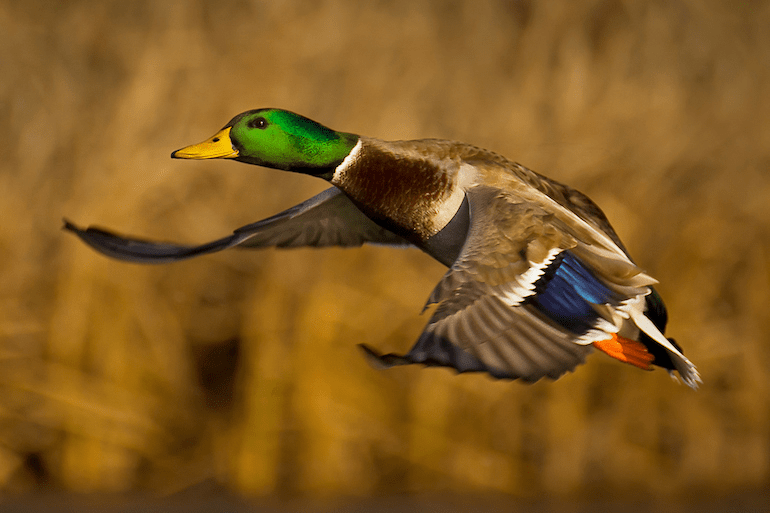
The Mississippi Flyway, one of the most prolific arteries for migratory birds, passes down the Mississippi River Valley in eastern Arkansas. Another longitudinal route is the Central Flyway, located just across the western border in modern-day Oklahoma. Millions of birds move through these corridors during their seasonal migrations, and Arkansas had two. Therefore, Arkansawyers have used these waterfowl as a food source from prehistoric to modern times.
Frenchman Jean-Bernard Bossu, traveling along the Mississippi River in the winter of 1750-1751, described how the Quapaws kept wild ducks in cages in their villages. He claimed that the Quapaws caught the fowl with their hands:
“Toward the end of autumn a multitude [of ducks arrive]. For this hunt the Akancas places come tame waterfowl or stuffed birds on the water. The others, deceived by the lures, are not afraid to approach. Then young savages swim under water like fish, grab the waterfowl by the feet, hook them by their heads to their loin clothes and bring them back alive. Finally, they pluck their wing feathers and put them in enclosures at their dwellings so they will have them to eat in time of need when the hunt yields nothing.”[1]
[1] Samuel Dickinson, New Travels in North America by Jean-Bernard Bossu, 1770–1771. (Natchitoches: Northwestern State University, 1982), 44.
 Arkansas Wildlife History